
A year of incredible expansion

This is a look back at how we partnered to plan, design, and deliver workspace improvements that support growth, team experience, and buildable outcomes. We also are taking inventory on opportunities to improve and have an even bigger impact this year. 

Hi From the Team

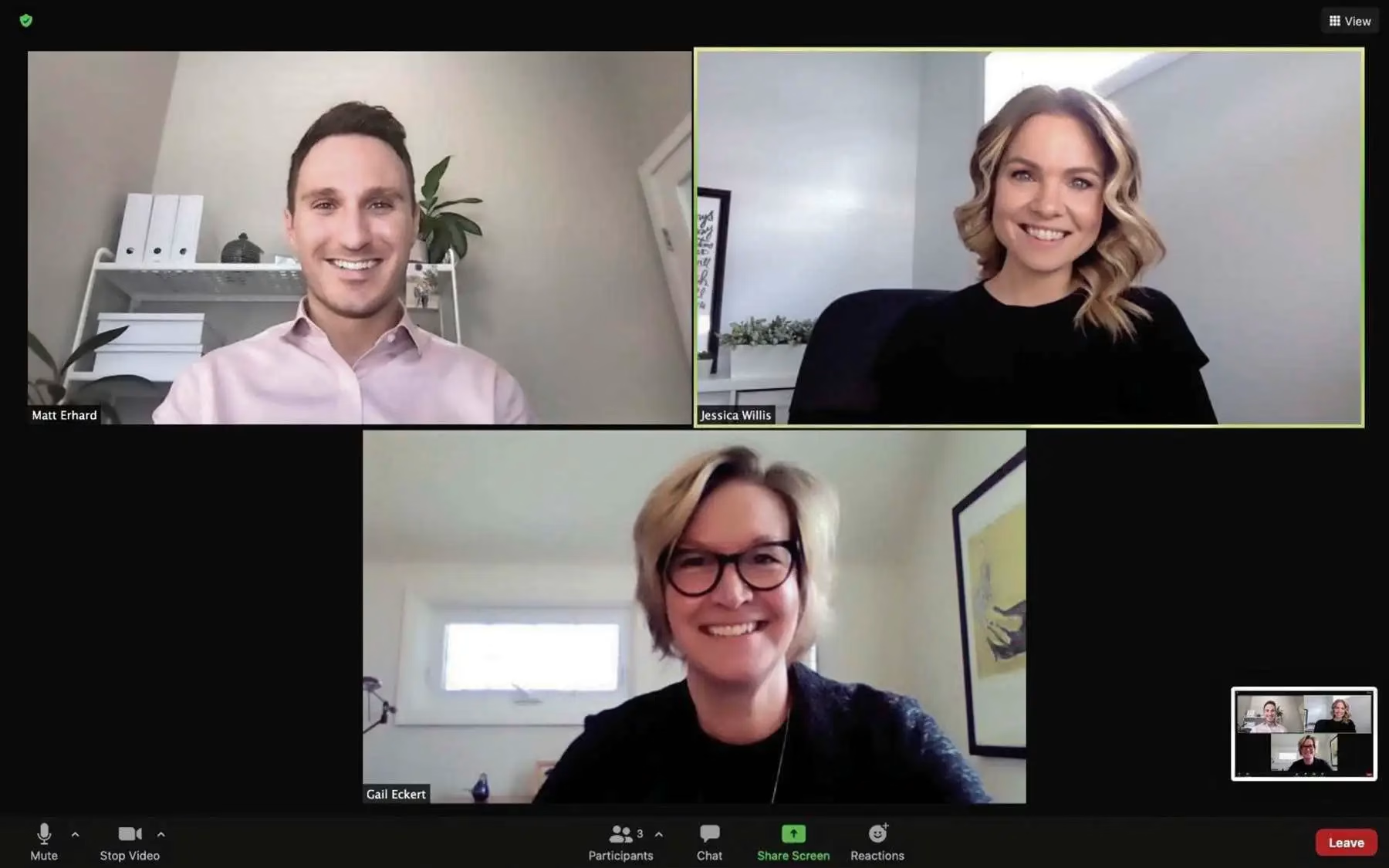
Below are a few personal videos from the Mackenzie & Lee team, with our thanks to everyone at Falon for the partnership and trust.
Syndey Sweeney
CEO
Margaret Thatcher
Senior Analyst
Keith Richards
Director of Direction
James Kurt
Urban Planning

Hi From the Team

Below are a few personal videos from the Mackenzie & Lee team, with our thanks to everyone at Falon for the partnership and trust.
Bruce Wayne
Senior Analyst
Bruce Wayne
Senior Analyst
Bruce Wayne
Senior Analyst
Bruce Wayne
Senior Analyst

2025 Recap

This year, Mackenzie & Lee partnered with Falon to advance workplace expansion planning and delivery. The work ranged from early space planning and programming through design development, documentation, consultant coordination, and construction-phase support. The most meaningful progress came from turning open questions into closed decisions early, then protecting those decisions through drawing clarity and steady coordination.

Across the year, the focus stayed practical: layouts that reflect real work patterns, details that can be built on schedule, and a predictable process for approvals, budgeting, and scope changes.

Tightening How Workplace Decisions Are Made and Escalated

On active tenant improvement work, small delays compound quickly. We improved decision ownership across planning, finishes, furniture, AV, and building constraints, with clear escalation when trade-offs impacted schedule or budget.

Streamlining How Design and Build Information Is Prepared for Leadership

As drawings, pricing, and vendor input arrived in different formats, leadership updates sometimes required interpretation. We standardized the way we summarize options, costs, schedule impacts, and recommendations to make approvals faster.

Aligning Coordination Cadence to the Build and Procurement Timeline

Design and construction do not move at one speed. We adjusted touchpoints to match permit milestones, contractor pricing windows, and long-lead procurement, which reduced churn and kept decisions timed to reality.

Falon Workplace Priorities for 2026

With foundational planning established, 2026 is about scaling consistency. That means tightening standards, improving predictability in procurement and pricing, and expanding the parts of the space that are working best for your teams.

Finalize Workplace Standards for Repeatable Growth

Confirm room types, finish guardrails, and brand moments so new areas feel consistent without redesigning each time.

Sharpen Space Allocation and Utilization Assumptions

Align headcount planning, hybrid patterns, and collaboration needs to avoid overbuilding and to reduce rework in test fits.

Reduce Schedule Risk from Long-Lead Items

Create a procurement approach for furniture, lighting, and specialty items that locks key decisions earlier and avoids late substitutions.

Improve Cost Predictability Through Design Milestones

Tie design progress to clear cost check-ins so budget decisions happen before drawings become expensive to change.

Clarify Consultant and Vendor Roles Early

Define who owns what across MEP, low-voltage, furniture, and signage so coordination is smoother and gaps are visible sooner.

M&L's Priorities for 2026

Our priorities focus on making the work easier for Falon to approve, faster for contractors to price, and clearer to build.

More Decision-Ready Presentations

Fewer options, clearer recommendations, and explicit trade-offs tied to cost and schedule.

Cleaner Drawing Sets for Faster Pricing

Reduce ambiguity so contractors can price confidently and fewer RFIs are needed later.

A Stronger Finish and Detail Library

Reusable standards for durability, maintenance, and brand consistency.

Procurement Support Earlier in the Process

Help lock lighting and furniture decisions at the right time, based on availability and lead times.

Tighter Construction Administration Rhythm

More predictable cadence for submittals, RFIs, site walks, and decision logs.

Active Initiatives

Entering 2026, several initiatives are actively underway to support Falon’s cybersecurity and risk priorities. These efforts reflect near-term focus areas and will continue to evolve as the business grows.

Year-End Project Review

Planning, Design, Documentation, and Delivery Signals
This review summarizes how the workplace expansion progressed across the year, what helped work move smoothly, and where friction showed up. It reflects planning milestones, decision timing, consultant coordination, and construction-phase inputs where applicable.
The intent is not to score performance. It is to capture what we learned together so the next phase moves faster, with fewer surprises and better cost and schedule predictability. Use this recap to align on what to keep, what to tighten, and what to prioritize as 2026 work gets underway.
Where Time Was Spent Across the Expansion Lifecycle
A meaningful share of effort was driven by coordination, approvals, and late clarification. The opportunity is to move more of that effort upstream into decision locks and standards.

Key Observations from 2025 Delivery

The strongest outcomes happened when we converted open questions into closed decisions early, particularly around planning assumptions, room mix, and scope boundaries. That clarity made design and contractor pricing cleaner and reduced downstream churn.
Where friction appeared, it usually came from timing mismatches. Procurement lead times, consultant inputs, and contractor pricing windows do not wait for perfect information. When decisions arrived late, the cost was felt in schedule compression, redesign, or substitutions.
What Drives Cost and Schedule Variability
Long-lead procurement, scope boundaries, and drawing clarity are the consistent drivers. Earlier alignment reduces bid spread, RFIs, and change exposure.

Observations

As the number of parallel workstreams increased, coordination overhead increased too. The work was not harder, it simply required clearer ownership across planning, finishes, furniture, AV, and building constraints. When those lanes were explicit, progress was steady and predictable.

Implications

The next phase will benefit from stronger standards and earlier decision locks. This reduces rework, protects budget, and allows leadership to focus on strategic choices instead of repeated clarifications.

How Workplace Delivery Capacity Was Consumed Across Core Activities

A disproportionate share of our joint delivery capacity this year was absorbed by option cycles, pricing coordination, and late-stage clarifications across trades, furniture, and building constraints. That effort helped keep work moving, but it reduced time available for standards, reusable details, and proactive planning that makes the next phase faster and more predictable.

The opportunity is not to reduce effort, but to rebalance it. Shifting even a modest portion of time upstream into earlier decision locks, clearer documentation, and a shared standards library will compound impact across future expansion phases.
What Drove Cost and Schedule Variability During the Build-Out
Most schedule pressure and budget drift this year came from a small set of repeat drivers: long-lead procurement, scope boundary ambiguity, and late coordination inputs from trades and vendors. When these were identified early, pricing stabilized and downstream churn dropped.
Where Rework Originated Across Planning, Design, and Documentation
ework was rarely caused by design quality. It was most often driven by changing assumptions, incomplete inputs, or decisions made after drawings had already advanced. Capturing assumptions early and tightening the decision log reduced rework and improved momentum in later phases.

Catalyst Commercial Performance Review

A focused diagnostic of growth constraints, execution gaps, and near-term opportunities.
This is a basic text This is a basic text element.This is a basic text element.This is a basic text element.This is a basic text element.This is a basic text element.This is a basic text element.This is a basic text element.This is a basic text element.This is a basic text element.This is a basic text element.This is a basic text element.
How Finance Capacity Is Consumed Across Core Activities
A disproportionate share of finance effort is spent on reconciliation, manual close, and rework—leaving limited capacity for analysis and decision support.

This is a heading.

This is a basic text This is a basic text element.This is a basic text element.This is a basic text element.This is a basic text element.This is a basic text element.This is a basic text element.This is a basic text element.This is a basic text element.This is a basic text element.This is a basic text element.This is a basic text element.This is a basic text element.element.This is a basic text This is a basic text element.This is a basic text element.This is a basic text element.This is a basic text element.This is a basic text element.This is a basic text element.This is a basic text element.This is a basic text element.This is a basic text element.This is a basic text element.This is a basic text element.This is a basic text element.element.This is a basic text This is a basic text element.This is a basic text element.This is a basic text element.This is a basic text element.This is a basic text element.This is a basic text element.This is a basic text element.This is a basic text element.This is a basic text element.This is a basic text element.This is a basic text element.This is a basic text element.element.This is a basic text This is a basic text element.This is a basic text element.This is a basic text element.This is a basic text element.This is a basic text element.This is a basic text element.This is a basic text element.This is a basic text element.This is a basic text element.This is a basic text element.This is a basic text element.This is a basic text element.element.
Distribution of Month-End Close Performance
A disproportionate share of finance effort is spent on reconciliation, manual close, and rework—leaving limited capacity for analysis and decision support.

This is a heading.

This is a basic text This is a basic text element.This is a basic text element.This is a basic text element.This is a basic text element.This is a basic text element.This is a basic text element.This is a basic text element.This is a basic text element.This is a basic text element.This is a basic text element.This is a basic text element.This is a basic text element.element.This is a basic text This is a basic text element.

This is a heading.

This is a basic text This is a basic text element.This is a basic text element.This is a basic text element.This is a basic text element.This is a basic text element.This is a basic text element.This is a basic text element.nt.element.

This is a heading.

This is a basic text This is a basic text element.This is a basic text element.This is a basic text element.This is a basic text element.This is a basic text element.This is a basic text element.This is a basic text element.This is a basic text element.This is a basic text element.This is a basic text element.This is a basic text element.This is a basic text element.element.This is a basic text This is a basic text element.
How Finance Capacity Is Consumed Across Core Activities
A disproportionate share of finance effort is spent on reconciliation, manual close, and rework—leaving limited capacity for analysis and decision support.
How Finance Capacity Is Consumed Across Core Activities
A disproportionate share of finance effort is spent on reconciliation, manual close, and rework—leaving limited capacity for analysis and decision support.

Process Improvement

Decision Ownership and Escalation for Build-Out Choices

We clarified who owns key calls across planning, finishes, furniture, AV, and schedule trade-offs.

Decision-Ready Updates for Leadership Approvals

We standardized how options are framed, with explicit impacts to cost, schedule, and experience.

Coordination Cadence Matched to Permit, Pricing, and Procurement

We aligned meetings and touchpoints to the moments when decisions actually needed to be made.

This is a key desicripton of this document. It will summarize briefly what its purpose is. This is a key desicripton of this document. It will summarize briefly what its purpose is.

This provides more detail on the document and why you need it. This provides more detail on the document and why you need it. This provides more detail on the document and why you need it. This provides more detail on the document and why you need it.

DATE: Jan 21, 2025
Status: Confidential

This is an explanation of this video or meeting. This is an explanation of this video or meeting.

This provided more detail on this conference call. What took place, and why it was an important meeting. This provided more detail on this conference call. What took place, and why it was an important meeting.

This is a description of this particular link. This example is a report. This is a description of this particular link.

This is a further detailed description of what at this link. This is a further detailed description of what at this link. This is a further detailed description of what at this link.

Looking Ahead and Maintaining Momentum

Experienced perspectives to help Falon maintain momentum and stay focused on what matters most.
working together

Tightening How Decisions Are Made and Escalated

Through our work together, we have seen moments where decisions stall because ownership, timing, or escalation paths are not always clear.

Streamlining How Information Is Prepared for Leadership

Some updates require additional interpretation to reach decision-ready clarity, which can slow leadership discussions.

Aligning Cadence to Actual Work in Motion

As initiatives progress at different speeds, the current engagement cadence may not always match where attention is most needed.

“Workplace projects succeed when decisions are timed to the realities of permitting, pricing, and procurement. When we tightened that timing this year, progress became much more predictable.”

Carrie Mcleish
Manager, Cyber Risk and Controls
Falon Account Coordinator - Strategy

“Clarity in drawings is not just a documentation goal. It is what reduces RFIs, protects schedule, and keeps design intent intact during construction.”

Melanie Coorigan
Director, IT and OT Security
Falon Account Lead - Systems

“As scope expands, the biggest risk is silent assumptions. Naming owners, capturing decisions, and setting escalation paths removed a lot of friction for the team.”

Mia Pritchard
Director, Data Privacy and Regulatory Readiness
Falon QA Manager - Data

We appreciate the partnership this year and look forward to supporting Falon’s next phase of workplace growth in 2026.

© 2025. All Rights Reserved.
Privacy Policy • Terms & Conditions

Thank you for a great 2025

Here's a short recap of the work, decisions, and momentum you were closest to this year.